
ARTIFICIAL MIND INSIGHT • AGENTIC AI GOVERNANCE & ASSURANCE
Before an AI Agent Acts: Who Controls the Permission?
There is a material difference between an assistant recommending an action and an agent executing it. A draft supplier email can be reviewed before being sent. An autonomous agent with access to systems might send, change, approve or purchase before a person sees the result. The control boundary must match the actual authority delegated.
Why a good prompt is not enough
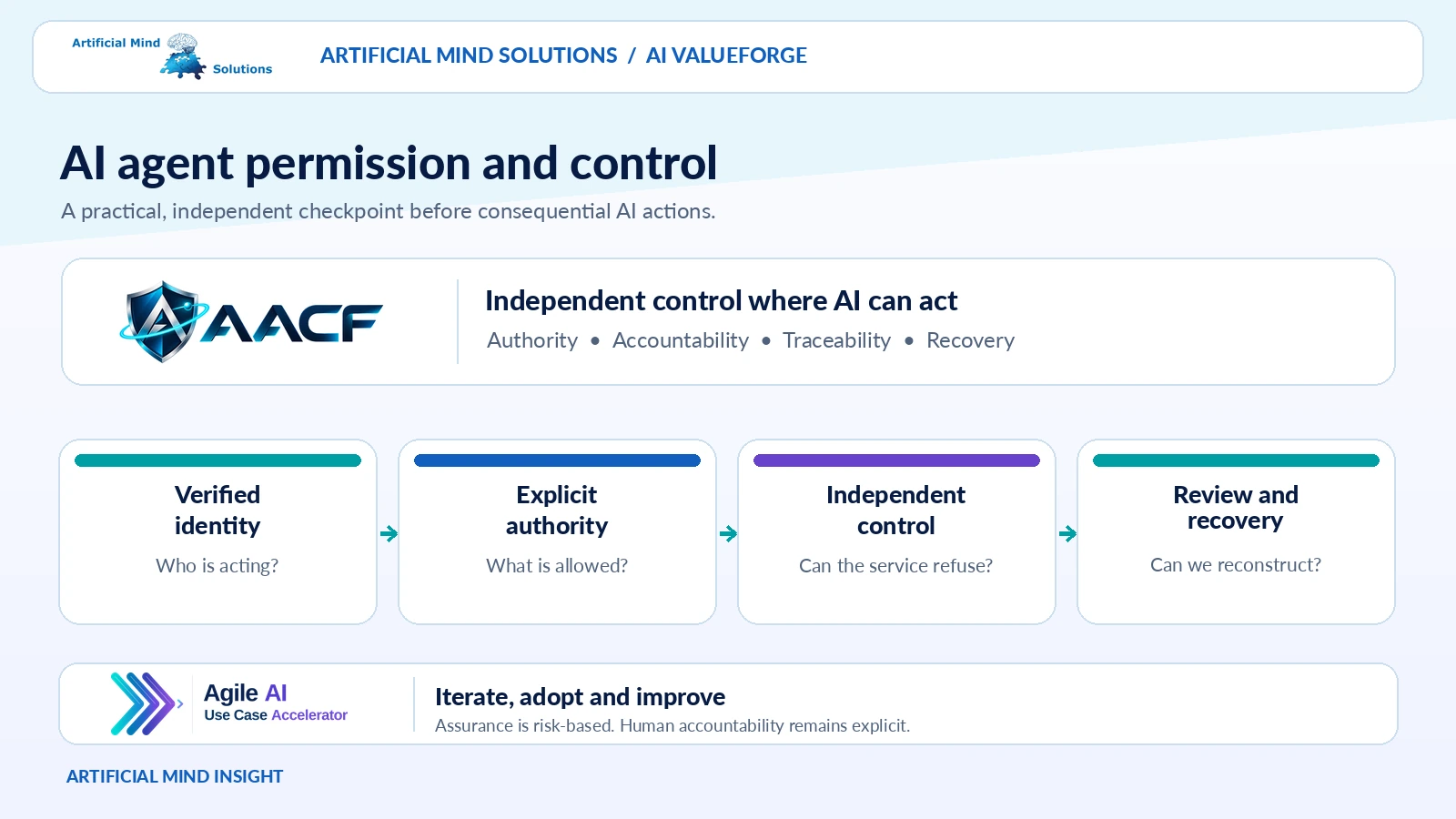
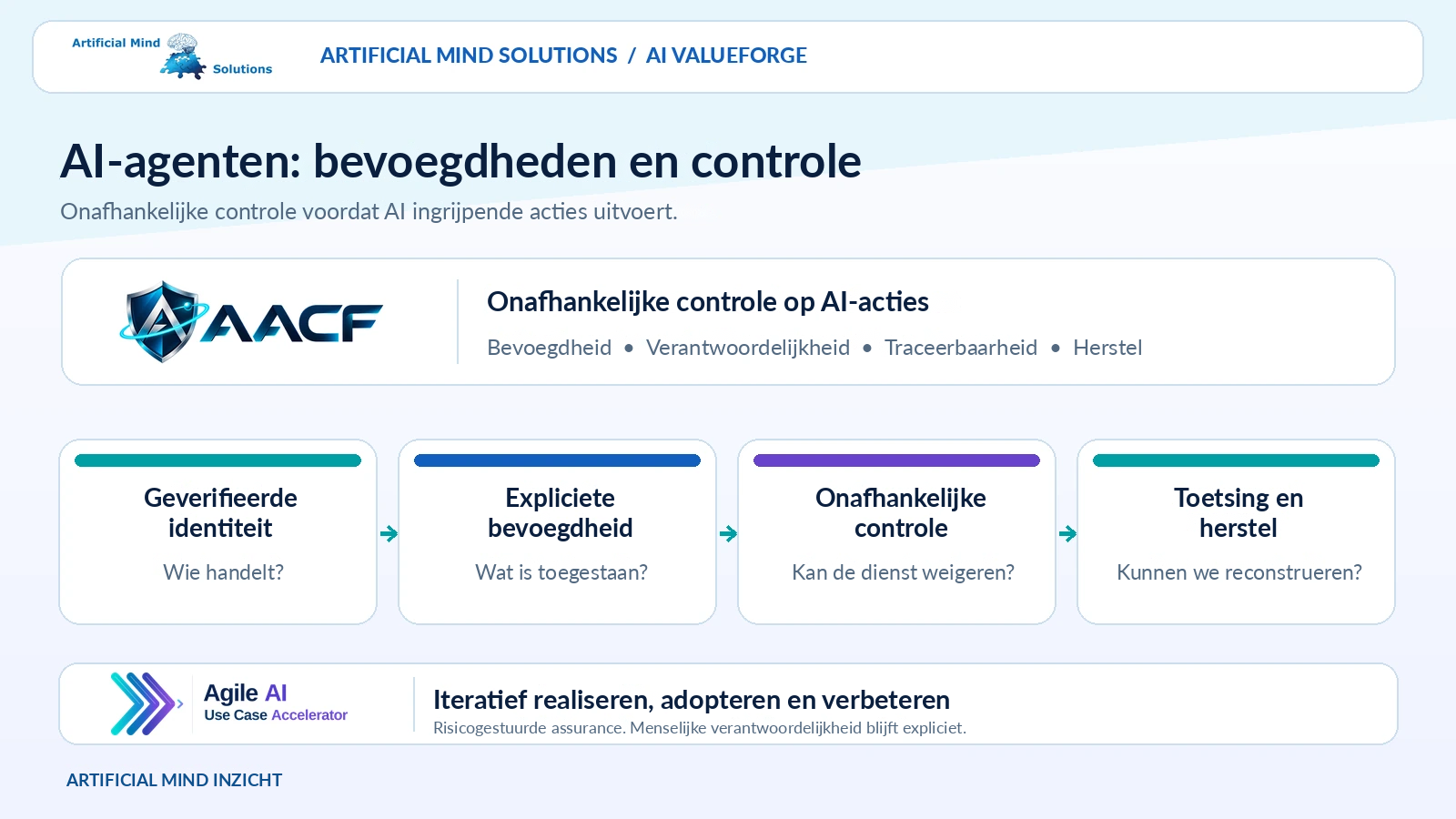
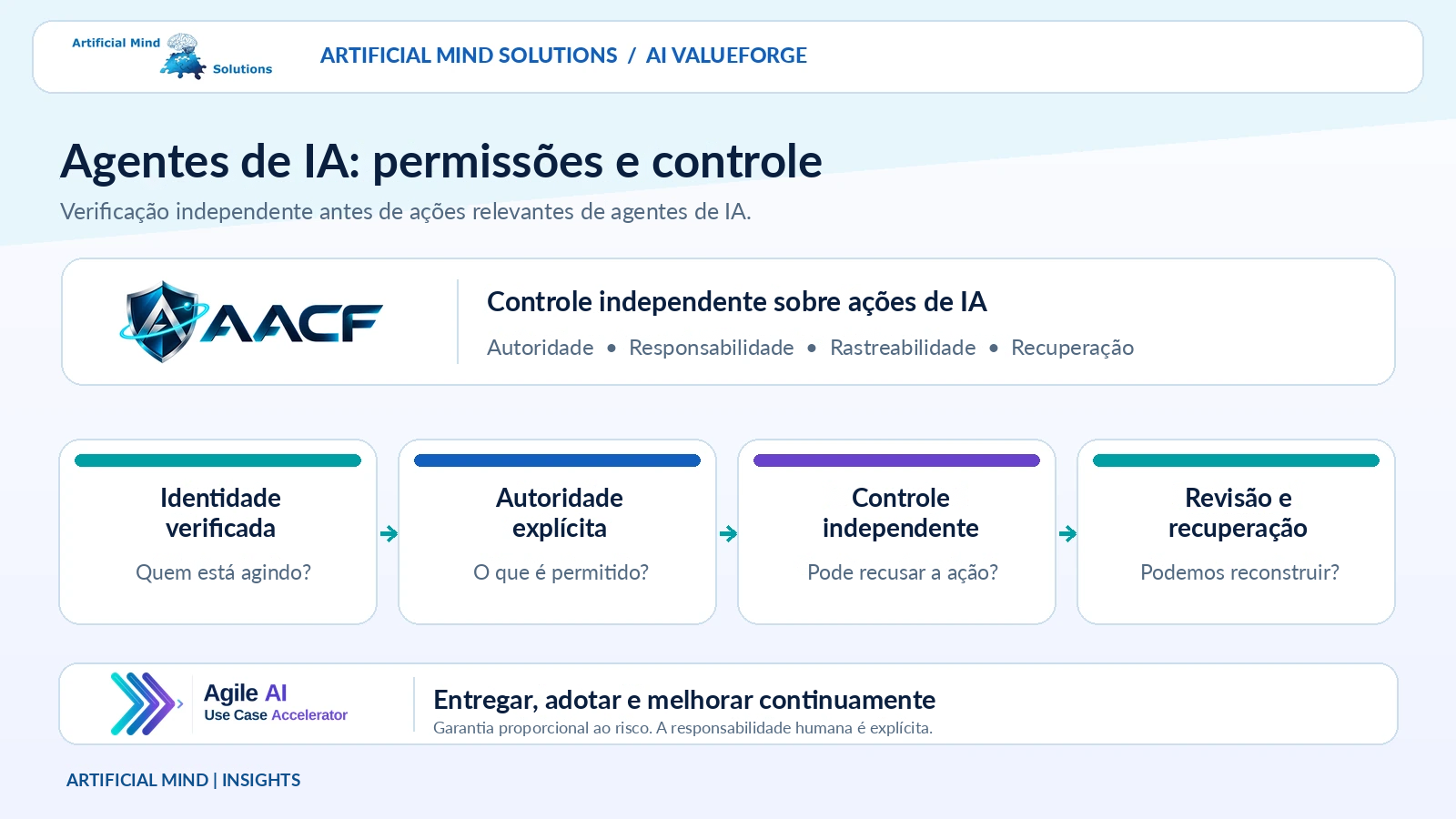
AI agents consume external documents, websites, emails and tool outputs. That material may include mistakes, conflicting instructions or prompt injection. A model’s claim that an action is permitted is not an independent authorisation decision. Permissions should be enforced by the services that execute consequential actions, based on verified identity and an approved scope.
Six questions for an accountable business owner
- Identity: Which user or service identity is acting and on whose behalf?
- Authority: What exact action, resource, amount, recipient and time window are permitted?
- Enforcement: Can a separate control reject an unauthorised tool call even if the agent requests it?
- Approval validity: If the amount, recipient or context changes, must the action return for review?
- Reconstructability: Can reviewers identify the relevant input, decision, policy, approval, tool invocation and observed effect?
- Recovery: How are permissions revoked, repeated actions prevented and incidents stopped or corrected?
Illustrative example: an agent prepares an order
An AI agent may collect approved supplier information and prepare a purchase request as a draft. A human reviews the exact supplier, amount and delivery details. A separate transaction service then checks that the approval still matches the action before submission. If a material field changes, the request is reviewed again. This is an example of a safer design pattern—not a claim about a deployed customer solution.
The role of AACF
The Agentic AI Assurance & Control Framework (AACF) helps structure proportionate governance, control evidence and independent assurance for systems that can create consequential effects. Its central principle is that a system should not be solely responsible for controlling the risks it can itself create. That includes agents, subagents, connected tools and delegated actions when they are relevant to the workflow.
Not every text assistant needs a full agentic review. Controls should be proportionate to impact, autonomy, data sensitivity and legal obligations. Documented controls and internal technical checks are not, on their own, independent audits, certifications or proof that production risk is eliminated.
Make governance useful to delivery
Define the exact permitted action; test negative cases in an authorised isolated environment; preserve human accountability; verify the control at the tool boundary; and scale access only after the evidence supports it. Clear controls can make useful automation easier to adopt, because the organisation knows where authority starts and stops.
A useful next step
If your organisation is evaluating AI opportunities or trying to turn an existing pilot into an operational result, discuss your challenge with Artificial Mind Solutions. We will begin with the decision you need to make—not a preferred technology.
 EN
 NL
 PT