
ILLUSTRATIVE PRACTICE CASE | FICTIONAL EXAMPLE | NO CUSTOMER RESULT CLAIM
Invoice Processing With Human Oversight | Illustrative Practice Case
This scenario is fictional and is not evidence of a deployed customer solution or savings achieved by Artificial Mind Solutions.
The problem worth solving
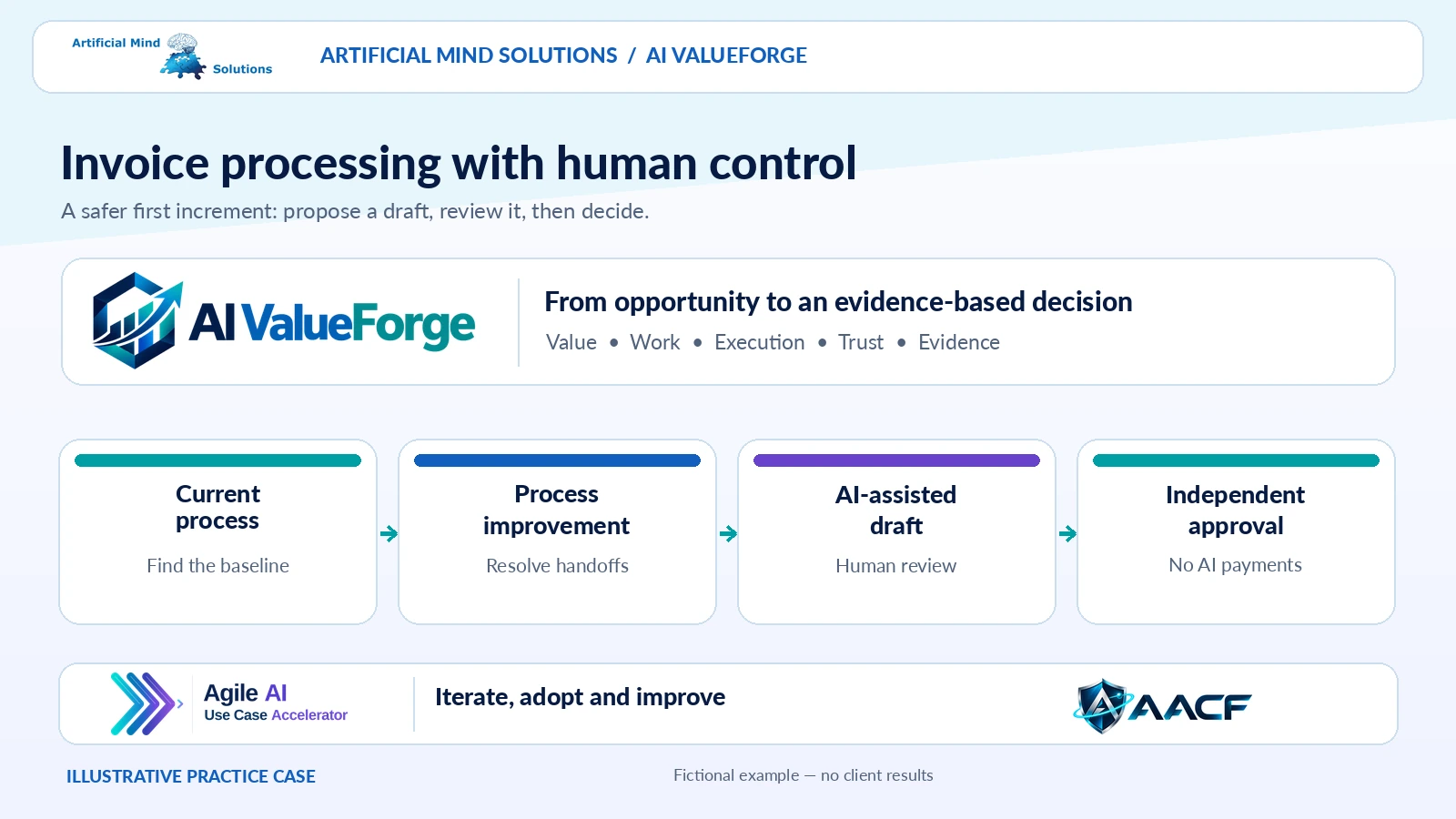
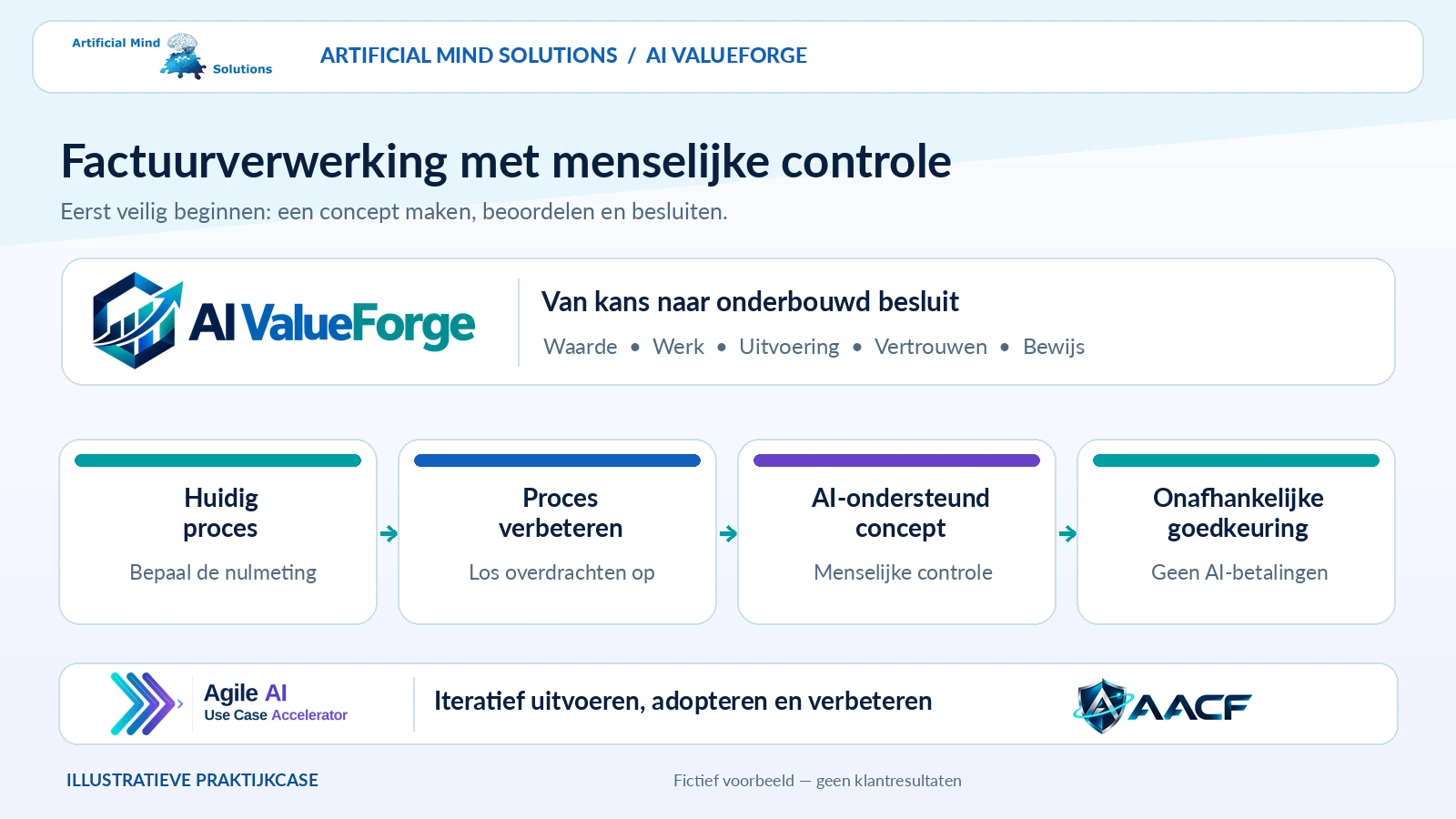
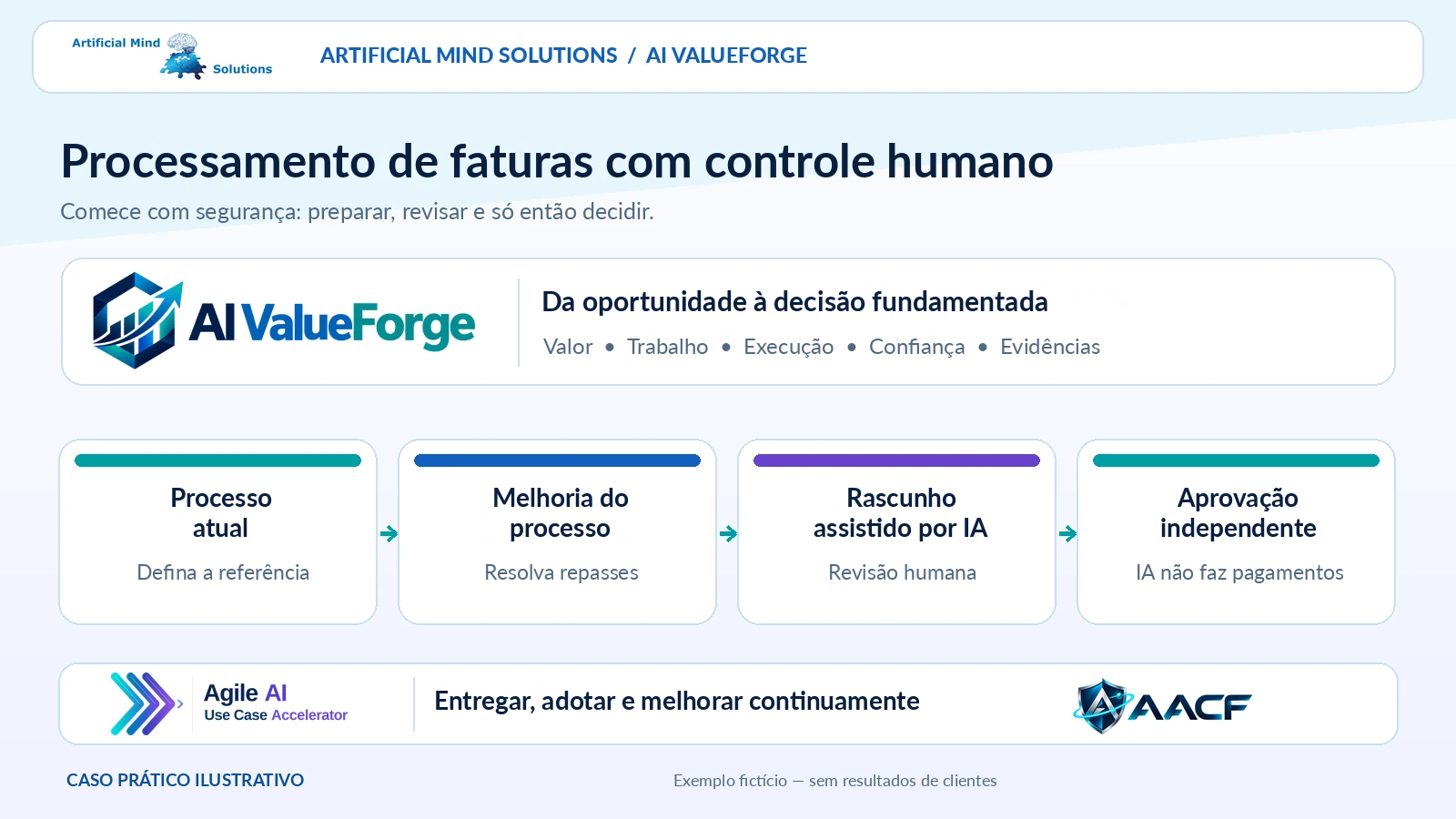
A finance team receives supplier invoices in different formats. Staff copy information into financial systems, investigate purchase-order mismatches and route exceptions for approval. Leadership wants shorter handling times and fewer errors while protecting supplier data and avoiding incorrect or duplicate payments.
Frame the decision and baseline
Finance, operations and security owners agree which metrics matter: field accuracy, exception and correction rates, complete handling time, review effort, payment errors and end-to-end cost. Representative approved samples include duplicates, changed bank details, inconsistent totals and missing references.
Compare the alternatives
- A — Current workflow: receive, check, extract, enter and reconcile invoices manually.
- B — Improve without additional AI: mandatory supplier fields, structured templates, deterministic duplicate detection and better exception routing.
- C — AI-assisted workflow: extract a proposed record from approved invoices with source-linked evidence; a finance reviewer checks uncertain and consequential fields before the record can advance.
First practical increment: draft only
The initial AI-supported increment proposes a draft capture record. It cannot create payments, update bank details or override approvals. The reviewer accepts, corrects or rejects each field with an appropriate record of the decision. The team tests negative examples before expanding the scope.
Where AACF becomes important
If a later AI agent can post ledger entries, alter supplier details or initiate payments, the risk and authority boundary changes. A proportionate AACF assessment would examine verified identity, independent authorisation, amount and recipient limits, scope-bound approvals, prevention of repeated actions, reconstructability, revocation and rollback. The agent must not be the only judge of whether its own action is safe.
The delivery and value decision
AI ValueForge ties the business outcome to Human–AI Work Design and evidence. The Agile AI Use Case Accelerator provides the iterative path from one safe increment to practical adoption and decision-making. Finance compares B and C on a comparable sample, including the costs of checking and exception handling, before any wider deployment.
Possible outcomes—not promised results
- Keep B if process simplification solves the main problem.
- Pilot C further if verified quality and efficiency exceed B without unacceptable risk or operating overhead.
- Rework the design or stop if accuracy, security, data quality or economics are insufficient.
- Preserve human accountability regardless of the chosen workflow.
No numeric improvements, customer names, certifications or independent audit conclusions are asserted for this fictional illustration.
Would a similar challenge be worth investigating?
If you want a structured discussion of business value, evidence, delivery options and control requirements, contact Artificial Mind Solutions. The first step is understanding your own work, not assuming that this fictional scenario matches it.
 English
 Nederlands
 Português